Rusty Gore: A Bold Display Font for Gothic and Metal-Themed Designs
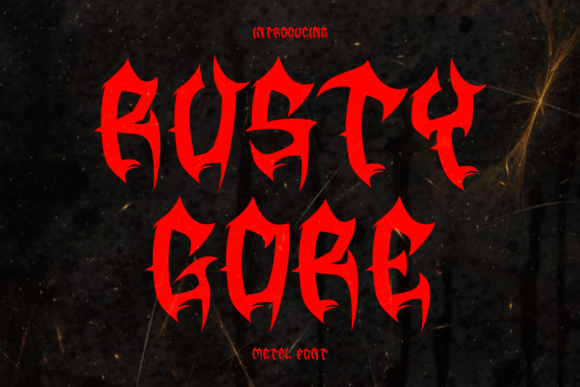
There’s a moment in every editorial project when the right font can shift the entire mood of a layout. I recently found myself in that situation while redesigning the header for a digital magazine focused on alternative music and subcultures. The challenge was to find a typeface that would feel powerful yet refined, something that could command attention without overwhelming the reader. That’s when I discovered Rusty Gore, a display font with a sharp, jagged, and spiked design that instantly felt like it belonged in the world of heavy metal, death metal, and gothic-themed designs.
Rusty Gore for Magazine Covers and Editorial Features
Rusty Gore is not just a font—it's an experience. Its aggressive edges and angular forms make it ideal for magazine covers or editorial features that aim to evoke intensity, rebellion, or dark elegance. When applied to a title like “The Sound of Rebellion,” the font adds a layer of visual tension that complements the content’s theme. It works especially well in print and high-resolution digital formats, where the texture and weight of the letterforms are preserved. However, for smaller text sizes or dense paragraphs, its expressive style may not be the best fit.
Rusty Gore in Blog Headers and Lifestyle Content
I tested Rusty Gore on a lifestyle blog focused on gothic fashion and alternative culture, and the results were striking. Used as a blog header or section opener, it brought a sense of drama and individuality that aligned perfectly with the brand’s voice. While it’s not suited for body copy due to its complexity, pairing it with a clean sans serif font for captions and navigation created a balanced, modern look. This kind of font pairing is essential in editorial design—using Rusty Gore as a display font while relying on a more readable base font ensures both visual appeal and usability.
Rusty Gore for Event Invitations and Branding Materials
Another use case that stood out was its potential in event invitations and branding materials. Whether it’s a concert poster, a festival announcement, or a themed newsletter, Rusty Gore has the power to elevate the visual impact. For instance, using it in a pull quote about the evolution of gothic subculture added a bold emphasis that made the content more engaging. But I also noted that it should be used sparingly—too much of it can create visual fatigue, especially in long-form content or dense layouts.
Rusty Gore and Readability Across Formats
When considering Rusty Gore for a publication, it’s important to think about how it will perform across different platforms. On screen, the font maintains its sharpness and clarity, but at smaller sizes, some of its intricate details can become less legible. For PDF exports and print materials, however, it shines—its bold character translates beautifully into physical formats. That said, it’s best reserved for titles, pull quotes, and decorative accents rather than for longer reading passages or small captions.
Rusty Gore for Digital Magazines and Course Content
In a recent project involving a digital magazine on music history, I used Rusty Gore for chapter openers and feature headlines. It helped establish a consistent editorial identity that matched the magazine’s aesthetic. Similarly, for a course PDF on graphic design fundamentals, I paired it with a minimalist sans serif font for the main text, allowing Rusty Gore to serve as a visual anchor without distracting from the content. This approach worked particularly well for content that needed a strong, memorable visual presence.
Whether you're working on a blog, magazine, ebook, or printable guide, Rusty Gore offers a unique opportunity to bring a sense of intensity and edge to your design. As with any display font, it’s crucial to consider its role within the overall layout and ensure it supports—not overwhelms—the message you’re trying to convey. With thoughtful application, Rusty Gore can become a powerful tool in your editorial toolkit, helping you craft designs that resonate deeply with your audience.