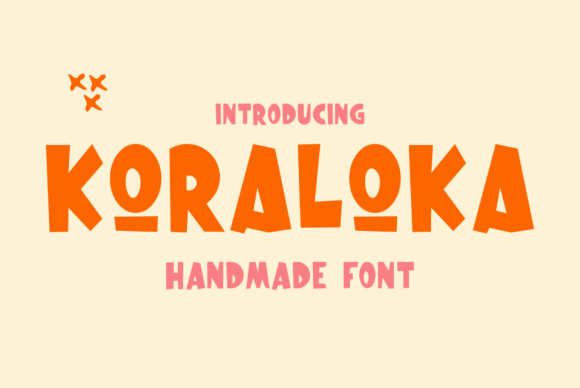
Koraloka: A Handmade Font for Authentic Branding
Koraloka on a Café Logo Concept
Koraloka is a Unique Handmade Font created with a personal touch to bring character and authenticity to your designs. When I first tested it on a logo concept for a boutique café, the font immediately stood out for its natural, hand-crafted flow that feels organic yet stylish. The irregular curves and subtle imperfections gave the logo a warm, artisanal vibe that perfectly matched the café’s cozy, locally-sourced theme.
Compared to more rigid sans-serif or traditional serif fonts, Koraloka felt like a breath of fresh air. It added a sense of approachability and charm, making the brand feel more human and less corporate. On a coffee mug mockup, the font didn’t look cluttered or too busy, which was reassuring for a small-scale branding project.
Koraloka in Packaging Design
Koraloka as a Display Font worked surprisingly well on product packaging for a handmade soap line. I placed it on a label next to a simple illustration of a leaf, and the combination felt cohesive and intentional. The font’s organic style complemented the natural ingredients listed beneath it, reinforcing the brand’s eco-friendly message without needing extra explanation.
One thing to note is that Koraloka isn’t ideal for long body text. When I tried using it for a full description on a product back label, the readability suffered. But when used sparingly—like for a tagline or brand name—it elevated the design significantly. For commercial use, I recommend pairing it with a clean sans-serif font for body copy to maintain legibility.
Koraloka on Social Media Graphics
Testing Koraloka on social media layouts for a creative studio’s Instagram feed was another eye-opening experience. The font’s personality shone through on short captions and promotional posts. It had a certain energy that felt playful yet professional, which aligned well with the studio’s identity as a modern, innovative space.
On a hero section of a website header, Koraloka looked great with a soft gradient background. The contrast between the font’s texture and the smooth gradient created visual interest without overwhelming the viewer. However, I found that it needed ample white space around it to avoid looking cramped. This makes it best suited for larger headings rather than dense blocks of text.
Koraloka for Business Cards and Brand Boards
When I used Koraloka on a business card for a local bakery, it brought a unique flair that set it apart from standard card designs. The font’s handwritten feel made the card feel more personal and memorable. Pairing it with a minimalist sans-serif for the contact details created a balanced, professional look while keeping the brand’s voice consistent across materials.
On a brand board, Koraloka helped unify the visual language. Its presence on a mood board, alongside textures and color palettes, acted as a strong anchor for the overall identity. It’s a great choice for designers who want to inject a bit of character into their brand without sacrificing professionalism.
When to Avoid Koraloka
While Koraloka is a Unique Handmade Font that brings character and authenticity to your designs, it may not be the best fit for every project. Projects requiring high readability, such as academic papers, legal documents, or formal reports, would benefit more from a clear, structured typeface. Similarly, Koraloka might not be ideal for digital interfaces where small text sizes are common, as the font can appear less crisp at lower resolutions.
For formal corporate use, especially in industries like finance or healthcare, a more conventional font would likely be more appropriate. That said, for creative studios, lifestyle brands, and niche markets, Koraloka can be a powerful tool to communicate a distinct brand voice.
Practical Tips for Using Koraloka
If you’re considering Koraloka for a client project, I recommend testing it in different contexts before finalizing. Try it on a mock-up of a logo, a sample poster, and a webpage layout to see how it performs under various conditions. Also, make sure to check the font’s licensing terms, especially if you plan to use it in commercial projects like packaging, websites, or print-on-demand products.
Font pairing is also important. Koraloka works best with complementary fonts that provide structure and clarity. A modern sans-serif or a classic serif can serve as an excellent counterpoint, helping to balance the font’s expressive nature with readability.
In conclusion, Koraloka is a versatile display font that adds a unique, handcrafted touch to any design. Whether you're working on a logo, packaging, or social media content, this font can help you create something that feels both authentic and visually compelling.